Why a study loan is the wrong tool for a startup
A student entrepreneur loan is financing intended to launch a business while still studying, which differs from a study loan because the money carries the risk of a venture instead of tuition costs. A bank student loan is granted to pay tuition and living costs, often with deferred repayment, on the assumption that you will graduate and find a job. Using it to buy stock, equipment or advertising for a business changes the risk entirely: if the venture fails, you still owe the full amount and the deferral will not protect you. Some loan contracts also specify the purpose of the funds, and a lender that discovers a different use can demand early repayment.
A student entrepreneur loan works differently. Lenders and honour-loan committees judge the project: the market, the founder's commitment, the numbers and the people backing it. A student founder therefore needs a separate financing plan, even if the amounts are small.
The French framework for student founders
Student-entrepreneur status
France has a national student-entrepreneur status (statut national d'étudiant-entrepreneur), granted through the PEPITE network of university and school entrepreneurship hubs. It is open to students and recent graduates with a business project. It allows you to keep student rights, sometimes to replace an internship with work on your project, and gives access to coaching, co-working space and a dedicated university diploma for founders. The status itself is not money, but it opens doors: many funders and incubators take PEPITE-backed projects more seriously.
Choosing a legal form
Many students start as micro-entrepreneurs, a simplified regime with light accounting and contributions calculated on turnover. Others form a company (SAS or SARL) when they have partners or need outside investment. The choice affects your personal liability and the kind of loans available, so discuss it with your incubator or a chamber of commerce adviser before borrowing.
Funding sources for a student entrepreneur loan in France
The French ecosystem relies on leverage: a first, unsecured personal loan reassures a bank, which then lends a larger amount to the business.
| Source | Form | Guarantee required | Typical use |
|---|---|---|---|
| Honour loan (Initiative France, Réseau Entreprendre) | Interest-free personal loan to the founder | None | Strengthens equity, unlocks bank loans |
| Microcredit (Adie and partner networks) | Small professional loan with support | Light; sometimes a personal guarantor | Founders refused by banks, small projects |
| Bank start-up loan | Professional loan to the business | Often partly covered by a guarantee body such as Bpifrance or France Active | Equipment, stock, working capital |
| Bpifrance innovation aid | Grants or repayable advances | None, subject to selection | Innovative or technology projects |
| Regional and school awards | Prizes, grants, incubator places | None | Prototypes, first customers |
| Crowdfunding | Donations, pre-sales or equity | None, but public commitment | Testing demand, consumer products |
Honour loans are the cornerstone. They are granted by a local committee after you present your project, carry no interest and require no guarantee. How those committees weigh a file is covered in detail under student honor loan. If your bank refuses a professional loan, student microcredit through specialised networks is the usual next step.
Student founders outside France
- United Kingdom: the government-backed Start Up Loans programme, run through the British Business Bank, lends to individuals for business purposes at a fixed rate, with free mentoring. It is a personal loan, so you are personally liable for repayment.
- Canada: Futurpreneur Canada combines financing for young entrepreneurs with long-term mentoring, often in partnership with the Business Development Bank of Canada.
- United States: SBA microloans are made through nonprofit intermediaries; many universities also run accelerators with small grants or equity investment.
- Belgium and Switzerland: universities run student-entrepreneur programmes, and regional public bodies offer start-up loans and guarantees; conditions vary by region and canton.
Illustrative example: building a funding plan
Inès, a master's student, wants to launch a refurbished-laptop resale business needing 17,000 euros: 9,000 for initial stock, 5,000 for a website and tools, and 3,000 of working capital. Her plan, purely for illustration:
- 2,000 euros of personal savings from summer work.
- An interest-free honour loan of 5,000 euros, repaid over five years.
- A bank professional loan of 10,000 euros over 48 months at an illustrative 5 % rate, partly guaranteed by a public guarantee body.
At 5 % over 48 months, the bank loan costs about 230.29 euros a month, or roughly 1,054 euros of interest in total. The honour loan adds 1,000 euros a year, about 83.33 euros a month. Inès must therefore generate around 314 euros a month for loan repayments before paying herself anything. Writing this figure into the business plan, and testing it against a pessimistic sales scenario, is exactly what the bank and the honour-loan committee want to see.
What committees look for in a student entrepreneur loan application
Whether you face an honour-loan committee in Lyon or a Start Up Loans adviser in Manchester, the questions are similar.
- A realistic business plan with sales assumptions you can justify, not just a target.
- Evidence of demand: pre-orders, letters of intent, a pilot with a first client.
- Your availability: how you will combine studies and business, and what happens after graduation.
- Personal contribution: even a small amount of your own money shows commitment.
- Support network: incubator, mentor, co-founders with complementary skills.
Prepare a one-page summary, a three-year forecast and a clear list of how every euro will be spent.
Presenting to a committee
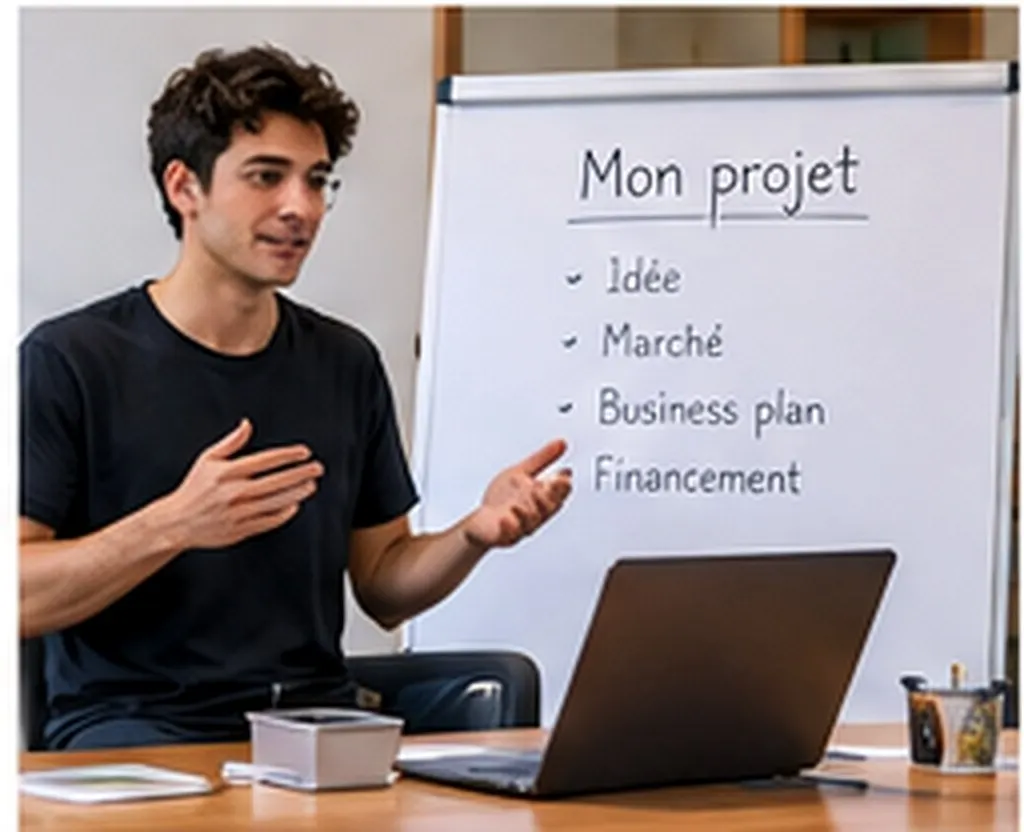
Honour-loan committees usually give a founder a short slot, often ten to twenty minutes, followed by questions from volunteers who are bankers, accountants and business owners. They have read your file, so do not recite it. Explain in two minutes what you sell, to whom and why customers will pay; then show the figures that worry you most and how you will react if sales are slower than planned. Bring a co-founder if you have one, and be precise about the hours you can give the business each week alongside lectures. A committee that senses you have tested your assumptions on real customers will forgive a modest forecast far more readily than an optimistic one.
Risks of a student entrepreneur loan
Founders under 25 often underestimate three dangers. First, personal liability: a micro-entrepreneur is liable with personal assets for business debts, subject to the protections the law provides, and a personal loan used for the business is your debt whatever happens to the company. Second, the study timeline: exams, internships or a year abroad can stop the business at the worst moment, and the loan keeps running. Third, mixing money: paying business expenses from a student account makes it impossible to see whether the project is viable, and complicates tax returns.
Be equally careful with offers of "startup funding" found on social media that require an upfront fee, and with investors who ask for a large share of the company for a small amount. An incubator or the PEPITE team can review any contract before you sign.
Keeping your studies financed at the same time
A business rarely pays its founder in the first year, so your living costs still need a source. Keep your grant if you are eligible, check whether a part-time job is compatible with the project, and if you need a loan for living costs, keep it separate from the business. If no family member can stand guarantor for that personal loan, founders can still use every route our student loan without a parental guarantor page sets out, starting with the French State guarantee. Founders who prefer to test demand before borrowing should also look at student crowdfunding, which can double as market research.
Timing matters as much as the choice of funder. Honour-loan committees and incubators work on their own calendars, and a bank will usually wait for the honour-loan decision before committing. Count several weeks, sometimes a few months, between the first contact and the release of funds, and avoid launching a stock-heavy business just before exam season. Founders who start the process in the autumn of their final year often have their financing in place by graduation, when they can give the project their full attention.
Frequently asked questions
Can a student get a business loan in France?
Yes. Banks lend to student founders when the project is solid, usually once an interest-free honour loan from a network such as Initiative France or Réseau Entreprendre has been obtained and part of the bank loan is covered by a public guarantee body. Students refused by banks can turn to microcredit networks. The national student-entrepreneur status, granted through the PEPITE hubs, helps by providing coaching and credibility.
Should I use my student loan to start a business?
It is generally a bad idea. A study loan is meant for tuition and living costs, and its deferral and pricing assume you will graduate and find a job. If the business fails, you still owe the whole amount. Some contracts also restrict how the money is used. Build a separate financing plan for the business and keep your student budget distinct.
What is an honour loan for entrepreneurs?
Think of it as a zero-interest loan made personally to the founder, without a guarantee, by an association after the project is presented to a committee. The founder then puts the money into the business, which strengthens its equity and makes banks more willing to lend. Repayment usually starts after a short grace period and runs over several years. Mentoring often comes with it.
Is there a start-up loan for students in the UK?
Students aged 18 or over can apply to the government-backed Start Up Loans programme, delivered through the British Business Bank. It is a personal loan for business purposes at a fixed rate, with free mentoring and help with the business plan. Because the borrower is the individual, you are personally responsible for repayment even if the business stops trading.
Do I lose my student status by creating a company?
Not in itself. In France you can keep your student status while running a micro-enterprise or a company, and the national student-entrepreneur status is designed precisely for this situation. Your grant may be affected if your own income becomes significant, and taxes and social contributions apply to business income. Check with your CROUS and URSSAF before your business starts generating regular revenue.